




Streamlining IoT Development and Management with IoT Driver Copilot, Shifu, and Shifu Cloud
The Internet of Things (IoT) has revolutionized the way we interact with technology, bringing connectivity to everyday devices and creating new opportunities for businesses to collect and analyze data. However, the rapid growth of IoT has also brought significant challenges to the industry, particularly in the areas of development and management.
One major challenge in IoT development is the lack of standardized device interfaces, which makes it difficult for developers to create compatible applications and services. Additionally, with the increasing complexity of IoT devices, it has become more challenging to manage and maintain them, especially when devices are deployed in large-scale and distributed environments.
To address these challenges, our company has developed a stack of products - IoT Driver Copilot, Shifu, and Shifu Cloud - that streamline IoT development and management. IoT Driver Copilot allows for the quick and easy generation of device drivers, reducing the workload and error rate of developers. Shifu virtualizes IoT devices into Kubernetes pods, enabling interoperability between devices and applications, and Shifu Cloud provides a platform for managing devices and applications at each edge location.
By leveraging our industrial edge solution, businesses can improve the efficiency and effectiveness of their IoT development and management processes. Our suite of products provides a standardized approach to device interface coding, simplifies device integration and operation, and streamlines device and application management, ultimately driving better outcomes and improving the bottom line.
Case Study
Background
The client, a synthetic biology lab specializing in bacteria production, featured numerous IoT devices. The collaboration among these different devices was challenging due to their lack of flexibility and the difficulty in implementing changes to pre-established programs. Integrating each device together typically required significant programming and complexity since every device might have its own unique software and hardware requirements. Changing programs or experiment processes might require the programming and integration to be redone, which could lead to inconvenience and difficulty.
Solution
Our industrial edge solution provided an innovative device virtualization strategy employing a Kubernetes-native development platform. This facilitated the uniformity of device interface coding, consequently ensuring continuous functionality of IoT applications in the synthetic biology laboratory. Here's how the client utilized each of our products:
-
IoT Driver Copilot:
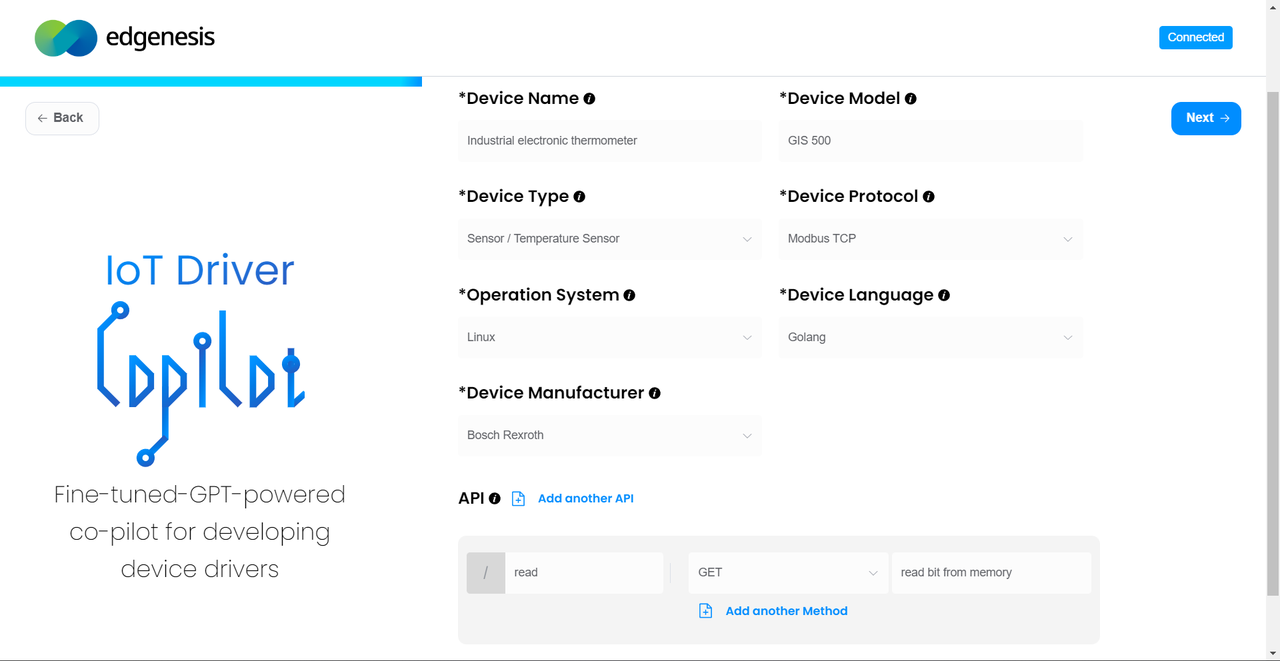
The client used IoT Driver Copilot to quickly generate highly available device drivers for their various IoT devices, such as the Franka Emika robot arm, Kuka robot arm, Tecan Spark plate reader, and custom-built automatic liquid dispenser. With automated testing and documentation generation capabilities, the workload and error rate of developers was greatly reduced. Moreover, IoT Driver Copilot supports Kubernetes-native deployment for your drivers, which turns generated drivers into Kubernetes pods for cloud-native benefits. This greatly simplifies the deployment process of generated drivers.
-
Shifu:
Shifu virtualized the client's IoT devices into Kubernetes pods, enabling interoperability between devices and applications. Shifu encapsulated the device drivers in Kubernetes pods called DeviceShifu, which contained a layer 7 proxy for communicating with other services within the cluster and a device driver for communicating with the associated device. By virtualizing the devices, IoT device drivers automatically inherited Kubernetes' advantages, such as scheduling, fault tolerance, and cluster scaling. This allowed for the uniformity of device interface coding, which ensured continuous functionality of IoT applications in the synthetic biology laboratory. With Shifu, the client was able to enhance the capabilities of their devices and reduce the complexity of integrating them together.
-
Shifu Cloud:
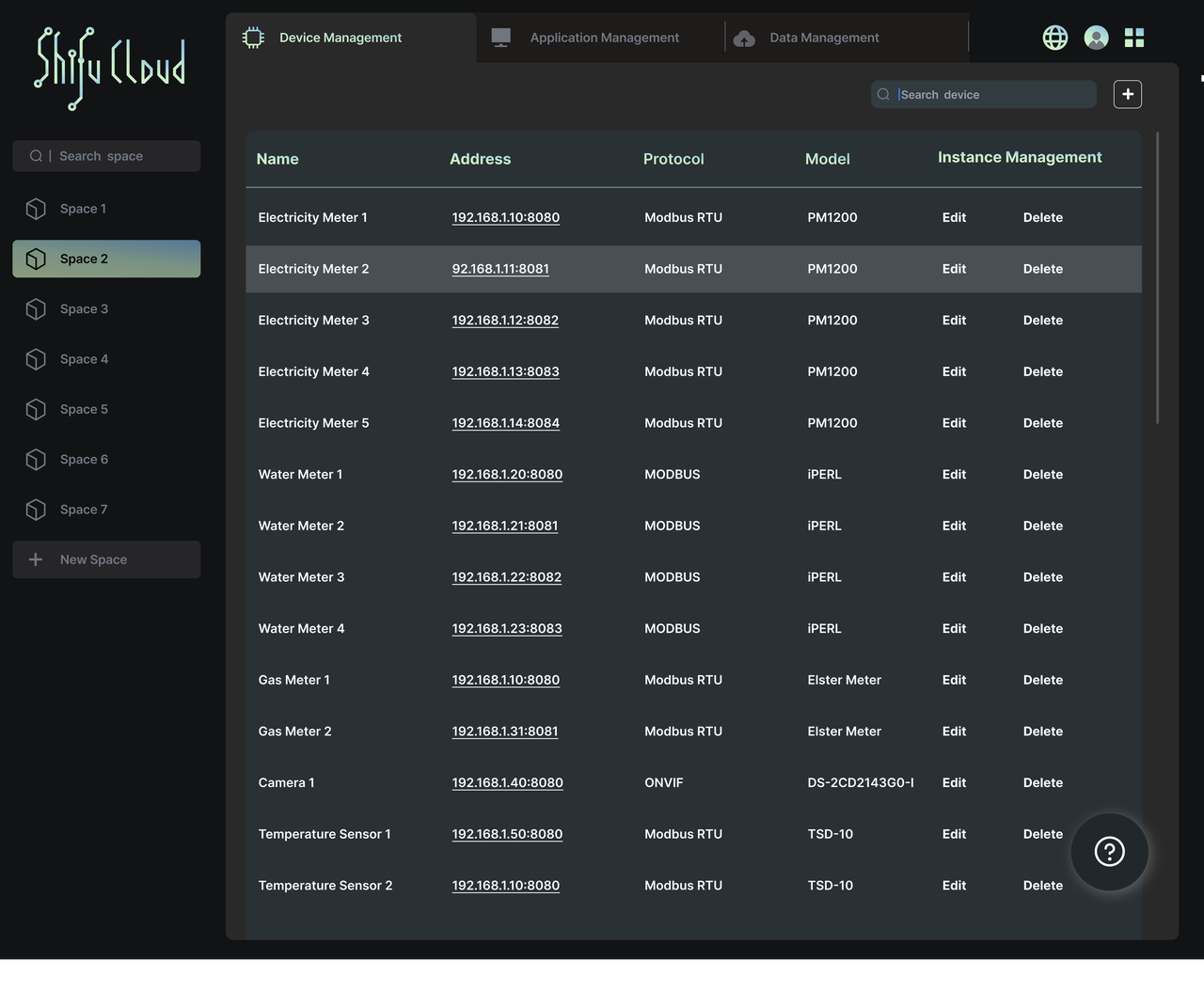
Once the devices are virtualized and deployed, the client can leverage Shifu Cloud to manage their devices and applications remotely. Shifu Cloud provided a platform for managing devices and applications at each edge location, supporting multi-user collaboration, device and application management, and device template storage. Shifu Cloud communicated with Shifu via the Kubernetes API Server, making it easier to manage and monitor the client's devices and applications remotely. The client could easily store device drivers as templates for future reuse, reducing the time and effort required to develop and deploy new devices.
Results
By leveraging our industrial edge solution, the client was able to achieve effective device and application communication, streamline production procedures, and improve workflow efficiency in their synthetic biology lab. The solution provided a standardized approach to device interface coding, simplifying device integration and operation, and streamlining device and application management. The client was able to easily modify and adjust their programs and experiment processes, without the need for significant programming and complexity. Ultimately, our industrial edge solution helped the client drive better outcomes and improve their bottom line.