




IoT Interoperability: The Missing Piece for AGI
A Benevolent Skynet: The Clear Endgame for AGI
The concept of Skynet, the self-aware artificial intelligence from the “Terminator” series, has long captured our imagination. But rather than envisioning a dystopian future, let’s consider a benevolent version of Skynet. This is not mere science fiction; it’s the clear endgame for AGI (Artificial General Intelligence). A world where AGI operates like Skynet but with altruistic intentions, connecting and enhancing our lives through a network of intelligent devices.
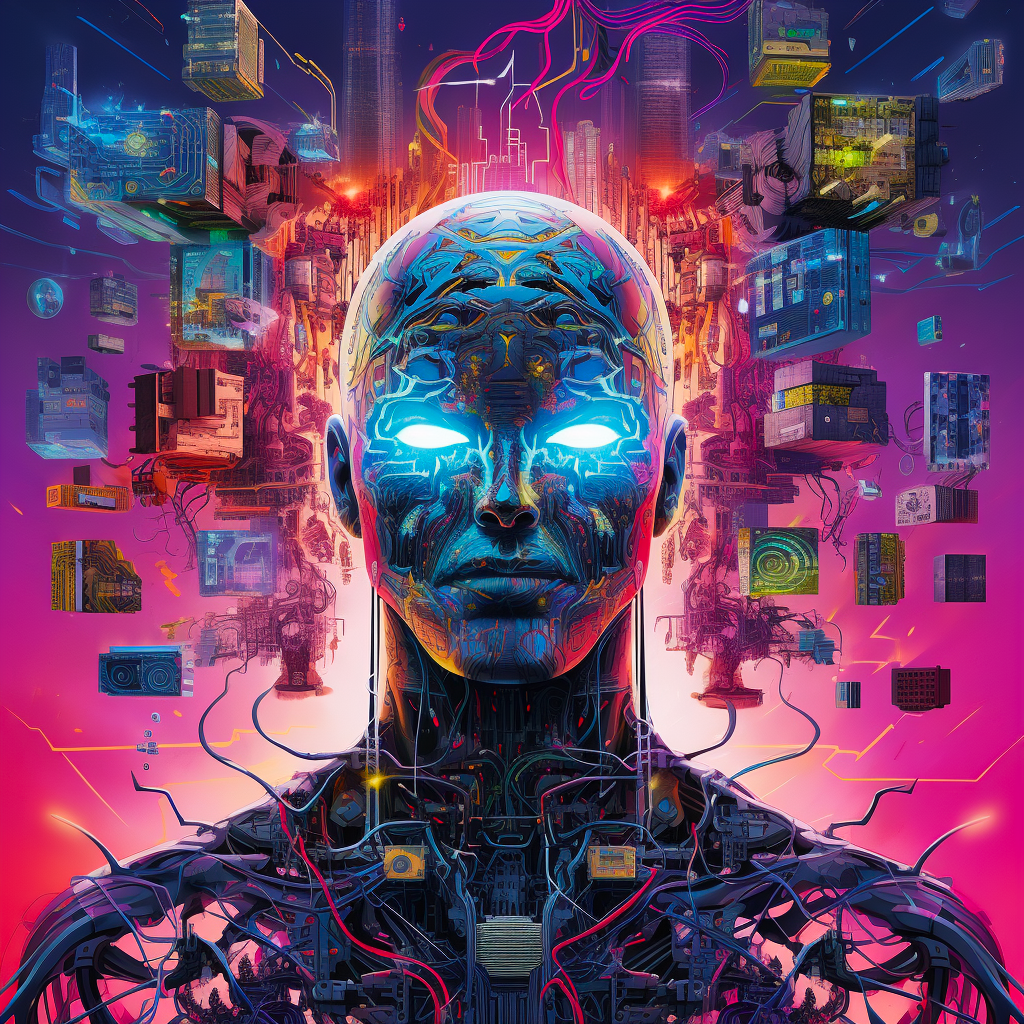
The Dual Nature of AGI: Digital Progress and Physical Challenges
Digital Component: Emergence, Agency, and Affordance
The digital realm of AGI has seen remarkable progress. Technologies like ChatGPT have demonstrated:
- Emergence: The ability to develop complex behaviors.
- Agency: Autonomous decision-making capabilities.
- Affordance: Meaningful interactions with the environment. These advancements represent three of the four key elements in AGI.
Physical Component: The Quest for Embodiment
The challenge lies in the physical component of AGI, specifically the element of embodiment. Current studies like RT-2 and PALM-E have primarily focused on robotic arms. However, true embodiment in AGI requires a centralized intelligence connected to numerous distributed physical bodies, including but not limited to robotic arms. In an AGI system, the centralized mind must connect to many distributed physical bodies effortlessly. This vision extends beyond robotic arms to a world where every device is an extension of AGI’s consciousness.
IoT Interoperability: The Missing Link to AGI’s Embodiment
IoT interoperability is the bridge that connects AGI’s digital intelligence with its physical manifestation. It’s more than connecting devices; it’s about creating a seamless network where AGI can communicate and control a myriad of physical entities.
Achieving IoT Interoperability: The Operating System Analogy
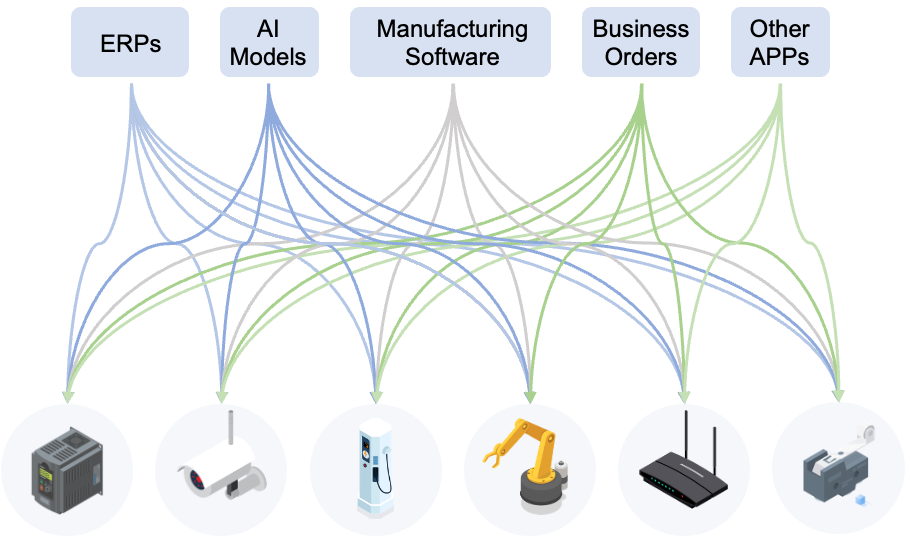
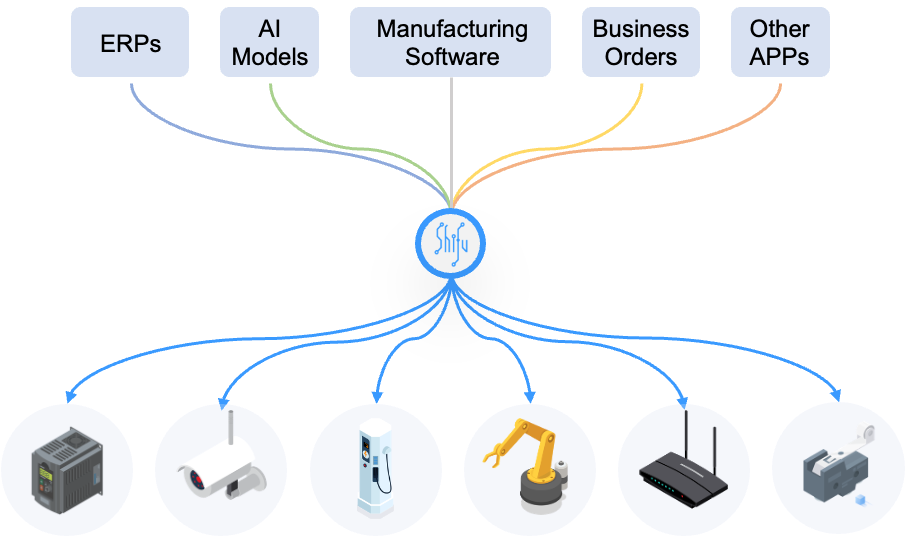
Achieving IoT interoperability is akin to the role that operating systems like Windows, Linux, iOS, and Android play in personal computing. Just as these operating systems enable various software applications to run on different hardware configurations, a specialized middleware layer or “operating system” for AGI can bridge various AI models and IoT devices.
Imagine a world where AGI’s operating system functions like Windows for computers or Android for smartphones. It would serve as a universal translator, enabling seamless communication and collaboration between different systems and technologies. By creating a common language and standardized protocols, this middleware ensures that all components of the AGI ecosystem can work together harmoniously, regardless of their individual specifications or manufacturers.
Introducing Shifu: A Kubernetes-Native Industrial Edge
Building on this concept, Shifu emerges as a promising solution. As an open-source Kubernetes-native industrial edge, Shifu connects AI models and applications to physical devices seamlessly. It acts as a conduit, bridging the gap between the digital intelligence of AGI and the tangible world of IoT. By leveraging the power of Kubernetes, Shifu ensures scalability, flexibility, and robustness, providing a cohesive platform that aligns with the vision of a benevolent Skynet. Shifu’s role in the AGI ecosystem is akin to the conductor of an orchestra, synchronizing various instruments to create a harmonious symphony.
Shifu is now open-sourced on GitHub: https://github.com/Edgenesis/shifu
System without Shifu acting as an operating system layer
Conclusion
The dream of a benevolent Skynet is not a distant fantasy; it’s the clear endgame for AGI. By embracing the digital progress and addressing the physical challenges, particularly through IoT interoperability, we are paving the way towards this vision.
The future of AGI is within our reach, and the path forward is illuminated by the promise of a harmonious partnership between technology and humanity. The benevolent Skynet awaits, and the key to unlocking it lies in our understanding and application of IoT interoperability.